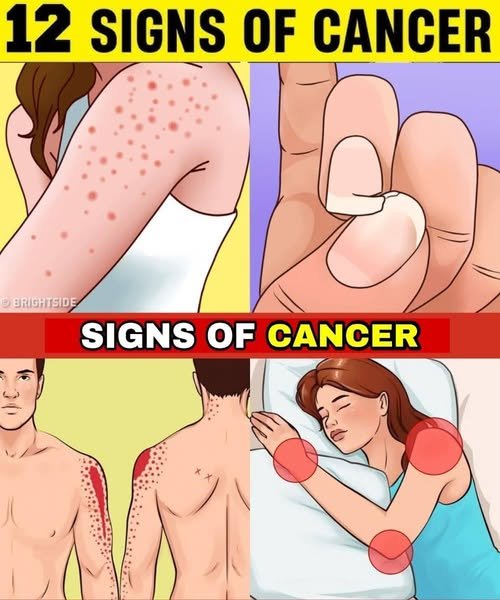
It’s important to say upfront: most of these symptoms are far more often caused by non-cancerous conditions. But persistent, unexplained changes in your body are worth checking out. Early detection dramatically improves outcomes for many cancers.
Here are 12 early warning signs that shouldn’t be ignored:
1. Unexplained Weight Loss
Losing 10+ pounds (4–5 kg) without trying can be an early sign of cancers such as pancreatic, stomach, lung, or esophageal cancer.
2. Persistent Fatigue
Extreme fatigue that doesn’t improve with rest may be linked to leukemia, colon cancer, or stomach cancer. Cancer-related fatigue often feels deeper than normal tiredness.
3. Unusual Lumps or Thickening
A new lump—especially in the breast, testicle, neck, armpit, or groin—should be evaluated. Not all lumps are cancerous, but painless, firm masses deserve attention.
4. Changes in Skin
Watch for:
- A mole that changes size, shape, or color (ABCDE rule)
- A sore that doesn’t heal
- Yellowing or darkening of the skin
These may indicate skin cancers such as melanoma.
5. Changes in Bowel Habits
Persistent diarrhea, constipation, narrowing of stool, or blood in stool may be signs of colorectal cancer.
6. Persistent Cough or Hoarseness
A cough lasting more than 3 weeks, coughing up blood, or voice changes can sometimes signal lung or throat cancer.
7. Difficulty Swallowing
Ongoing trouble swallowing may relate to throat, esophageal, or stomach cancer.
8. Unexplained Bleeding
Examples include:
- Blood in urine
- Blood in stool
- Vaginal bleeding between periods or after menopause
- Coughing up blood
Any unexplained bleeding warrants medical evaluation.
9. Frequent Infections or Fevers
Recurring infections or unexplained fevers can be associated with blood cancers like leukemia.
10. Persistent Pain
Ongoing pain (back, abdominal, headaches) without a clear cause should be checked—especially if it’s new and doesn’t improve.
11. Changes in Urination
Frequent urination, pain while urinating, or difficulty urinating may be associated with prostate or bladder cancer.
12. Night Sweats
Drenching night sweats, especially with weight loss or fever, can sometimes signal lymphoma.
🚨 When to See a Doctor
See a healthcare professional if:
- A symptom lasts more than 2–3 weeks
- It worsens over time
- It’s unusual for your body
- You have a strong family history of cancer
Early evaluation doesn’t mean you have cancer—but it can rule it out or catch it early when treatment is most effective.
If you’d like, I can also share common cancer screening recommendations by age.