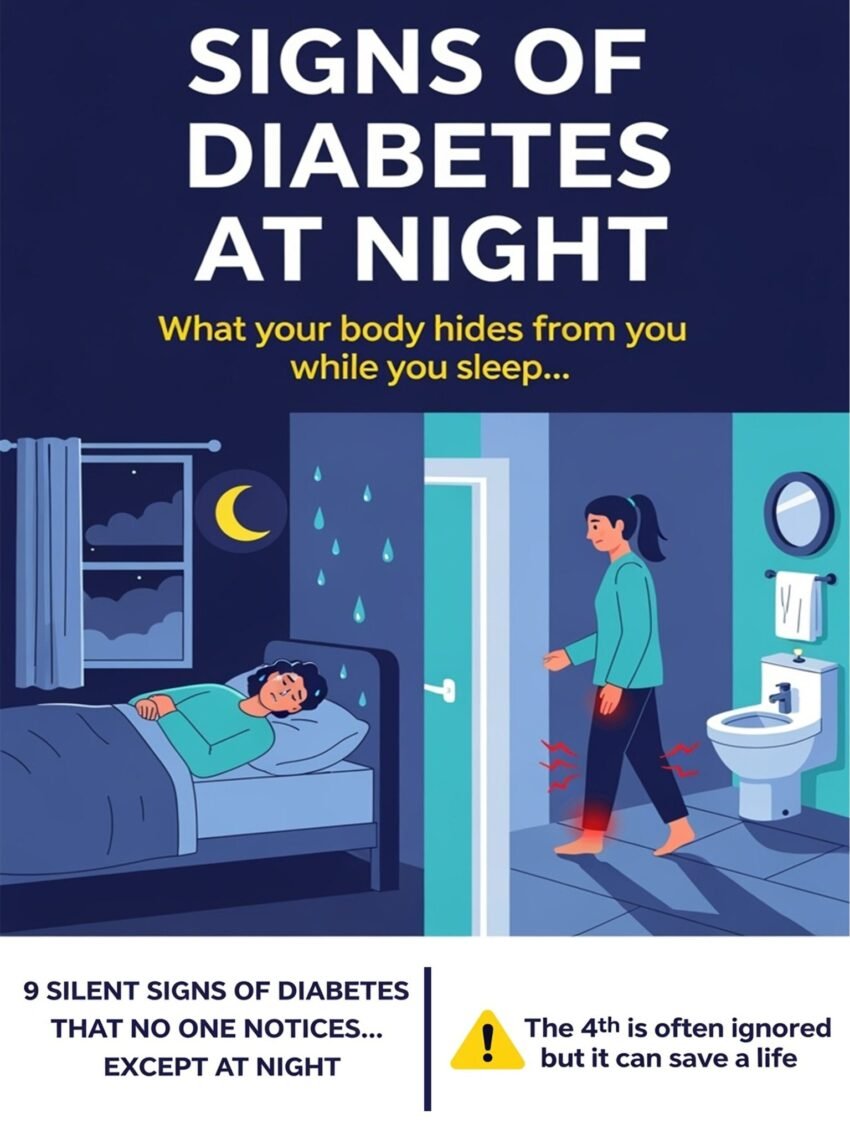
9 Signs of Diabetes That Appear at Night: What You Need to Know
Diabetes can cause symptoms that are more noticeable at night, often disrupting sleep and overall well-being. These nighttime signs may be early warnings of blood sugar imbalance and should not be ignored. Understanding them can help with early detection and timely medical care.
1. Frequent Nighttime Urination (Nocturia)
High blood sugar causes the kidneys to work harder to remove excess glucose from the blood. This leads to increased urine production, making you wake up multiple times at night to urinate.
2. Excessive Thirst During the Night
Losing fluids through frequent urination can cause dehydration. Many people with diabetes wake up feeling extremely thirsty and may need to drink water repeatedly throughout the night.
3. Night Sweats
Low blood sugar during sleep (nocturnal hypoglycemia) can trigger sweating. These night sweats may soak clothing or bed sheets and are often accompanied by restlessness.
4. Restless or Poor-Quality Sleep
Fluctuating blood sugar levels can interfere with normal sleep cycles. People with diabetes may struggle to fall asleep, wake frequently, or feel unrefreshed in the morning.
5. Tingling, Burning, or Pain in the Hands and Feet
Diabetic neuropathy can cause nerve discomfort that becomes more noticeable at night when the body is at rest. Symptoms may include numbness, tingling, or sharp pain.
6. Leg Cramps at Night
Poor circulation and nerve damage associated with diabetes can lead to painful leg cramps, especially during nighttime hours.
7. Headaches Upon Waking
High or low blood sugar levels overnight can result in morning headaches. These headaches may be a sign that blood glucose is not well controlled during sleep.
8. Nighttime Hunger or Sudden Awakening Feeling Shaky
Low blood sugar can cause sudden hunger, shakiness, confusion, or anxiety during the night, sometimes waking a person abruptly.
9. Dry Mouth or Itchy Skin at Night
Dehydration and poor circulation caused by diabetes can lead to dry mouth and itchy skin, which often feels worse at night when distractions are minimal.
When to See a Doctor
You should consult a healthcare professional if:
- These symptoms occur regularly
- You have a family history of diabetes
- You notice unexplained weight loss, fatigue, or blurred vision
- Symptoms worsen or interfere with daily life
A simple blood test can help determine whether diabetes or prediabetes is present.
Key Takeaway
Nighttime symptoms such as frequent urination, thirst, sweating, nerve discomfort, and sleep disturbances may be early signs of diabetes. While these symptoms can have other causes, persistent patterns should be evaluated by a medical professional.
Early diagnosis and proper management can prevent complications and significantly improve quality of life.
If you would like, I can also provide:
- Early daytime signs of diabetes
- Differences between Type 1 and Type 2 diabetes
- Diet and lifestyle tips for blood sugar control
- Warning signs of prediabetes
Just tell me what you would like next.