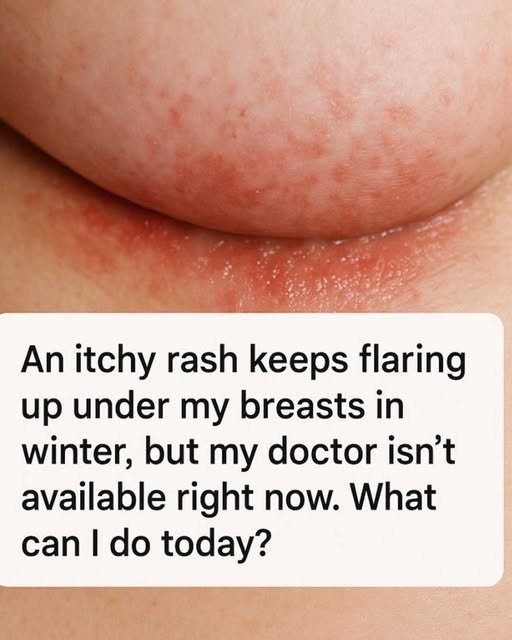
An Itchy Rash Keeps Flaring Up Under My Breasts in Winter — What Can I Do Today?
A recurring itchy rash under the breasts is very common, especially in winter. Cold weather, heavy clothing, dry skin, and trapped moisture can all make the area irritated and inflamed. While you should see your doctor if it persists or worsens, there are safe steps you can take today to calm it down.
Why It Happens More in Winter
Even though winter feels dry, the skin folds under the breasts can still trap:
-
Sweat
-
Heat
-
Friction from bras and thick fabrics
Common causes include:
-
Intertrigo (skin irritation from friction and moisture)
-
Yeast overgrowth (fungal infection)
-
Eczema or contact dermatitis
-
Heat rash
The under-breast area is warm and enclosed, making it prone to irritation.
What You Can Do Today
1. Gently Clean and Thoroughly Dry the Area
-
Wash with lukewarm water and a mild, fragrance-free cleanser
-
Pat dry — do not rub
-
Make sure the skin fold is completely dry (you can use a cool hair dryer setting if needed)
Moisture is the biggest trigger for flare-ups.
2. Keep the Area Dry
After cleaning and drying:
-
Apply a thin layer of zinc oxide cream (a barrier cream)
-
Or use a light dusting of antifungal powder if you suspect yeast
Avoid heavy oils or thick petroleum-based products if the area feels moist, as they can trap heat.
3. Wear Breathable Fabrics
-
Choose cotton bras or go braless at home if comfortable
-
Avoid tight, synthetic materials
-
Change out of sweaty clothing quickly
Reducing friction and airflow restriction helps healing begin.
4. If It Looks Red and Irritated (But Not Oozing)
You may use a mild over-the-counter hydrocortisone cream for 1–3 days to calm inflammation. Do not use it long term without medical advice.
If the rash:
-
Has sharp borders
-
Looks bright red
-
Has small satellite spots around it
It may be fungal, and an over-the-counter antifungal cream (such as clotrimazole) used twice daily for 1–2 weeks can help.
When to Seek Urgent Care
Even if your regular doctor is unavailable, seek medical attention sooner if you notice:
-
Severe pain
-
Rapid spreading redness
-
Pus or oozing
-
Fever
-
Cracked skin that won’t heal
These may signal a bacterial infection that needs prescription treatment.
Preventing Future Winter Flare-Ups
Once it improves, you can reduce recurrence by:
-
Keeping the area dry daily
-
Using antifungal powder preventively if you are prone to yeast
-
Maintaining a healthy skin barrier with gentle moisturizers (outside the fold area)
-
Wearing properly fitted bras
Final Thoughts
Most under-breast rashes in winter are caused by moisture, friction, or mild fungal overgrowth and can improve within a few days with proper care. Focus on drying the area, reducing friction, and using the right topical treatment.
If it doesn’t improve within a week or keeps returning frequently, a medical evaluation is important to rule out persistent fungal infection, eczema, or other skin conditions.