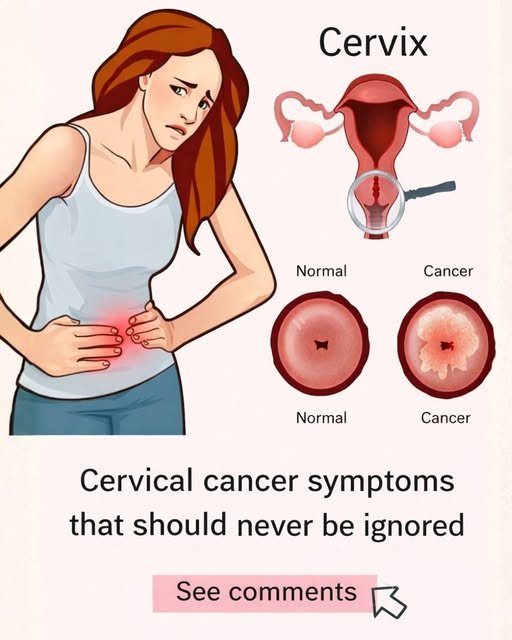
Cervical cancer often develops slowly and may not cause symptoms at first — which is why screening is so important. But when symptoms appear, some should never be ignored.
Cervical cancer affects the cervix (the lower part of the uterus), and most cases are caused by persistent infection with high-risk strains of HPV (human papillomavirus).
⚠️ Symptoms You Should Not Ignore
1️⃣ Abnormal vaginal bleeding
-
Bleeding between periods
-
Bleeding after sex
-
Bleeding after menopause
-
Periods that are heavier or last longer than usual
This is the most common warning sign.
2️⃣ Unusual vaginal discharge
-
Watery, pink, or foul-smelling discharge
-
Discharge mixed with blood
3️⃣ Pelvic pain
-
Persistent pain in the lower abdomen
-
Pain during intercourse
4️⃣ Advanced-stage symptoms
If cancer spreads, symptoms may include:
-
Leg swelling
-
Lower back pain
-
Difficulty urinating
-
Fatigue or unexplained weight loss
Important: Many Early Cases Have No Symptoms
That’s why regular screening is critical.
Screening methods:
-
Pap smear
-
HPV test
HPV vaccination significantly reduces risk.
When to See a Doctor
See a healthcare provider urgently if you have:
-
Bleeding after menopause
-
Bleeding after sex
-
Persistent unusual discharge
-
Pelvic pain that doesn’t improve
Most abnormal bleeding is not cancer, but it should always be checked.
If you’d like, I can also explain:
-
Who is at highest risk
-
At what age screening should start
-
Early vs late-stage survival rates
-
HPV vaccination details
Just tell me what you’d like to know.