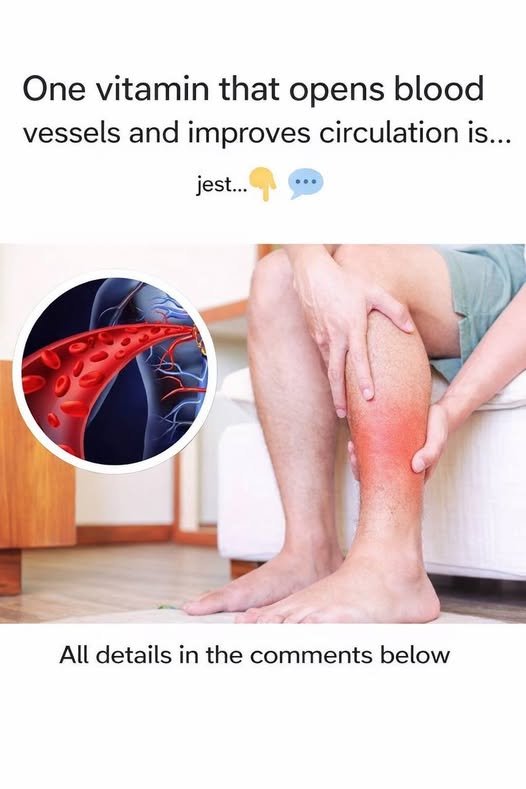
One Vitamin That Opens Blood Vessels and Improves Circulation
Good circulation is essential for delivering oxygen and nutrients throughout the body. Poor blood flow can lead to fatigue, cold extremities, and increased cardiovascular risk. While a balanced diet and lifestyle are foundational, certain vitamins play a significant role in supporting healthy blood vessel function and circulation. One nutrient that stands out for this purpose is Vitamin E.
What Is Vitamin E?
Vitamin E is a fat-soluble antioxidant found in many plant-based foods. It protects cells from oxidative stress and supports the health of blood vessels and red blood cells. By reducing oxidative damage and helping maintain flexible vessel walls, Vitamin E can support improved blood flow.
How Vitamin E Supports Circulation
1. Antioxidant Protection
Vitamin E neutralizes free radicals — unstable molecules that can damage the lining of blood vessels. This helps preserve endothelial function, which is crucial for proper vessel dilation and circulation.
2. Inhibition of Platelet Aggregation
Vitamin E may reduce the tendency of platelets to clump together. When platelets stick excessively, they can contribute to restricted blood flow and clot formation. By moderating this, Vitamin E supports smoother circulation.
3. Healthy Blood Vessel Walls
Vitamin E helps maintain the flexibility and integrity of blood vessel walls. Flexible vessels are better able to expand and contract in response to changes in blood flow needs.
Food Sources Rich in Vitamin E
To support circulation naturally, include Vitamin E–rich foods in your diet:
-
Nuts and Seeds: Almonds, sunflower seeds, hazelnuts
-
Plant-Based Oils: Wheat germ oil, sunflower oil, safflower oil
-
Leafy Greens: Spinach, Swiss chard
-
Avocado
-
Fortified Foods: Cereals and plant milks with added Vitamin E
Including a variety of these foods daily can help maintain adequate levels of this nutrient.
Suggested Daily Intake
Recommended daily amounts of Vitamin E vary by age and sex, but for most adults, a target of 15 milligrams (22.4 IU) per day is typical. Consult a healthcare provider before starting supplementation, especially if you are taking medications that affect blood clotting.
Simple Recipe to Support Circulation
Spinach and Almond Salad with Citrus Dressing
Ingredients:
-
4 cups fresh baby spinach
-
1/2 cup sliced almonds, toasted
-
1 small avocado, diced
-
1 orange, peeled and segmented
-
2 tablespoons extra virgin olive oil
-
1 tablespoon fresh lemon juice
-
Salt and pepper to taste
Instructions:
-
In a large bowl, combine spinach, toasted almonds, avocado, and orange segments.
-
In a small bowl, whisk together olive oil, lemon juice, salt, and pepper.
-
Pour dressing over salad and toss gently to coat.
-
Serve immediately.
This salad pairs Vitamin E (from spinach, almonds, and avocado) with vitamin C from citrus, which further supports vascular health and iron absorption.
Precautions and Interactions
Vitamin E supplementation can interact with blood-thinning medications (e.g., warfarin) and increase bleeding risk if taken in high doses. Always discuss supplementation with a healthcare professional, particularly if you have cardiovascular conditions, are on multiple medications, or are preparing for surgery.
Conclusion
Vitamin E plays an important role in supporting healthy blood vessel function and improving circulation through its antioxidant properties and influence on blood components. Including Vitamin E–rich foods as part of a balanced diet, along with regular physical activity and hydration, can help maintain optimal blood flow and overall cardiovascular health.
If you would like more recipes rich in circulation-supporting nutrients, let me know.