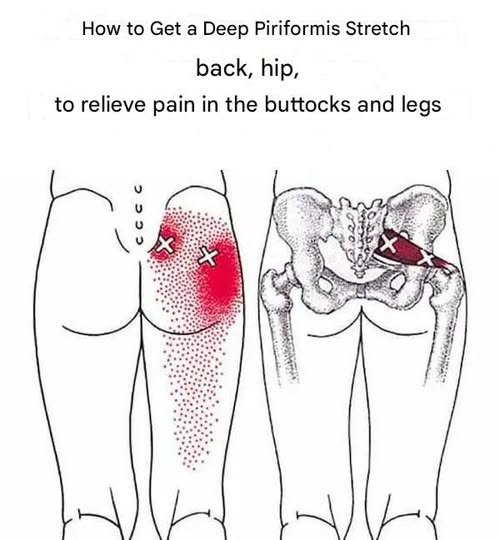
How to Get a Deep Piriformis Stretch to Help Relieve Back, Hip, Glute, and Leg Pain
Understanding the Piriformis Muscle
The piriformis is a small muscle located deep in the buttock area, connecting the lower spine to the top of the thigh bone. It helps rotate the hip and stabilize the pelvis. When this muscle becomes tight or irritated, it can press on the sciatic nerve and contribute to pain in the lower back, hips, buttocks, or legs. This condition is often referred to as Piriformis Syndrome.
Benefits of Stretching the Piriformis
Regularly stretching the piriformis muscle may help:
-
Reduce pressure on the sciatic nerve
-
Improve hip mobility
-
Decrease lower back and glute discomfort
-
Support better posture and movement
Deep Piriformis Stretch (Figure-4 Stretch)
Step-by-Step Instructions
-
Lie on Your Back
Lie flat on your back on a comfortable surface such as a yoga mat. Bend both knees and keep your feet flat on the floor. -
Cross One Leg Over the Other
Place your right ankle over your left knee, creating a figure-4 shape with your legs. -
Pull the Leg Toward Your Chest
Reach behind your left thigh and gently pull it toward your chest. You should feel a stretch deep in your right glute. -
Hold the Stretch
Hold this position for about 20–30 seconds while breathing slowly and deeply. -
Switch Sides
Slowly release the stretch and repeat the same steps on the opposite side.
Seated Piriformis Stretch
How to Do It
-
Sit upright in a chair with both feet on the floor.
-
Place your right ankle on top of your left knee.
-
Keep your back straight and slowly lean forward.
-
Stop when you feel a gentle stretch in the glute area.
-
Hold for 20–30 seconds, then switch sides.
Tips for Better Results
-
Perform the stretch once or twice daily.
-
Move slowly and avoid bouncing during the stretch.
-
Keep breathing steady to help the muscles relax.
-
Stop immediately if you feel sharp or worsening pain.
When to Seek Medical Advice
If pain spreads down the leg, causes numbness, or does not improve with stretching, it may be related to Sciatica or Piriformis Syndrome. In such cases, consulting a healthcare professional or physical therapist is recommended for proper diagnosis and treatment.