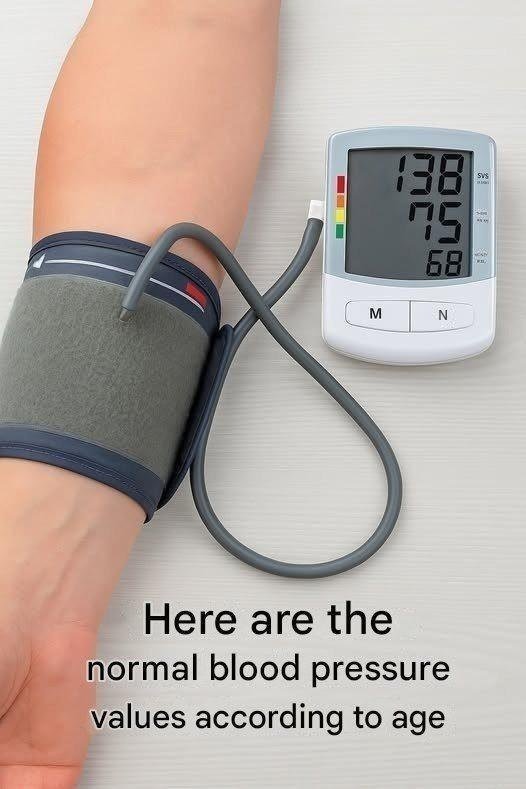
Here is a clear, medically responsible article with proper headings and neutral tone.
Normal Blood Pressure Values According to Age
Blood pressure measures the force of blood pushing against artery walls. It is recorded as two numbers:
- Systolic pressure (top number): pressure when the heart beats
- Diastolic pressure (bottom number): pressure when the heart rests between beats
While “normal” blood pressure targets are generally similar for most adults, average values can vary slightly with age due to changes in blood vessels, activity levels, and overall health.
General Blood Pressure Categories (Adults)
According to widely used clinical guidelines:
- Normal: Less than 120 / 80 mm Hg
- Elevated: 120–129 / less than 80 mm Hg
- High Blood Pressure (Stage 1): 130–139 / 80–89 mm Hg
- High Blood Pressure (Stage 2): 140 / 90 mm Hg or higher
These categories apply to most adults regardless of age, but typical readings often trend upward over time.
Average Blood Pressure by Age Group
Children (Under 13 Years)
Normal blood pressure in children varies by height and sex, but typical values are around:
- 90–110 / 55–75 mm Hg
Pediatric blood pressure should always be interpreted by a healthcare provider using age-specific charts.
Teenagers (13–19 Years)
- 110–120 / 65–80 mm Hg
Readings consistently above 120 / 80 mm Hg in teenagers may require monitoring.
Adults (20–39 Years)
- 110–125 / 70–80 mm Hg
Blood pressure in this age group is often lower due to more elastic blood vessels and higher physical activity.
Adults (40–59 Years)
- 115–135 / 75–85 mm Hg
Systolic pressure commonly increases with age as arteries gradually stiffen.
Older Adults (60 Years and Older)
- 120–140 / 70–90 mm Hg
Slightly higher systolic readings are common, but most medical guidelines still recommend keeping blood pressure below 130 / 80 mm Hg when safely possible.
Why Blood Pressure Changes With Age
As people age:
- Arteries become less flexible
- Hormonal regulation changes
- Chronic conditions become more common
- Physical activity may decrease
These factors can contribute to higher blood pressure over time.
When Blood Pressure Is a Concern
You should consult a healthcare provider if:
- Readings are consistently above 130 / 80 mm Hg
- You experience symptoms such as headaches, dizziness, chest pain, or shortness of breath
- You have risk factors such as diabetes, kidney disease, or a family history of hypertension
High blood pressure often has no symptoms, which is why regular monitoring is important.
Final Notes
- Normal blood pressure targets are similar for most adults, regardless of age
- Individual goals may vary based on overall health and medical history
- Lifestyle choices such as diet, exercise, stress management, and sleep play a major role in blood pressure control
This information is for educational purposes only and should not replace professional medical advice. Always consult a qualified healthcare provider for diagnosis and personalized guidance.
If you want, I can:
- Turn this into a simple chart or table
- Rewrite it for SEO or a health website
- Adapt it for social media or newsletter content