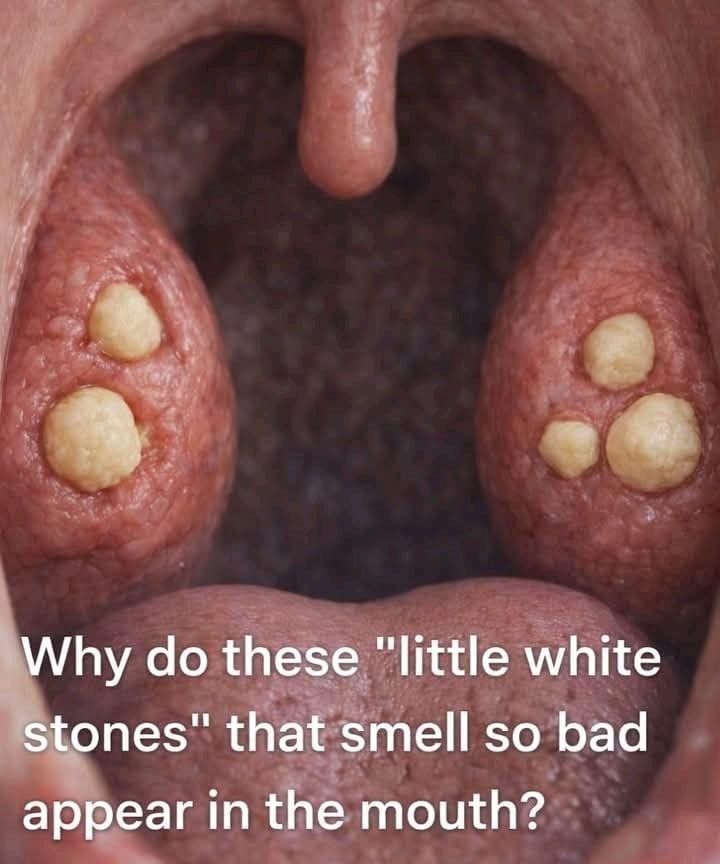
Those gross little “white stones” are tonsil stones—and yes, they’re a very real (and very smelly) thing.
Here’s the straight truth 👇
What Are Tonsil Stones?
Tonsil stones, medically called tonsilloliths, are small, whitish or yellowish lumps that form in the crevices (crypts) of your tonsils.
They’re made of:
- Trapped food particles
- Dead cells
- Mucus
- Bacteria
Over time, this debris hardens and calcifies, forming tiny stones that can smell absolutely awful.
Why Do Tonsil Stones Smell So Bad?
The bacteria involved produce sulfur compounds—the same gases responsible for:
- Rotten egg smell
- Sewage-like breath
- Persistent bad breath (halitosis)
That’s why tonsil stones can cause bad breath even if you brush and floss well.
👃 If your breath smells bad despite good oral hygiene, tonsil stones are a top suspect.
Common Signs You Have Tonsil Stones
You might have tonsil stones if you notice:
- Chronic bad breath
- White or yellow lumps in the back of your throat
- Sore throat without infection
- Feeling like something is stuck in your throat
- Metallic or unpleasant taste
- Ear pain (referred pain from the throat)
- Coughing up small, foul-smelling bits
Some people don’t feel them at all—just the smell.
Why Do Some People Get Them More Than Others?
You’re more likely to develop tonsil stones if you:
- Have large or deeply folded tonsils
- Get frequent tonsillitis or throat infections
- Have postnasal drip or allergies
- Breathe through your mouth
- Have chronic dry mouth
- Don’t clean your tongue regularly
They’re not dangerous, but they are annoying.
How to Remove Tonsil Stones (Safely)
At Home (Small Stones)
- Gargle with warm salt water
- Use a water flosser on low pressure
- Gently remove with a clean cotton swab (be careful)
- Gargle non-alcoholic mouthwash
⚠️ Don’t dig aggressively—you can injure your tonsils.
Medical Treatment
- A dentist or ENT can remove them safely
- If stones are frequent and severe, an ENT may recommend:
- Laser cryptolysis (smoothing tonsil crevices)
- Tonsillectomy (rare, last resort)
How to Prevent Tonsil Stones
You can reduce recurrence by:
- Brushing and flossing twice daily
- Cleaning your tongue daily
- Gargling after meals
- Staying well hydrated
- Treating allergies and sinus issues
- Avoiding smoking and excessive alcohol
- Using a humidifier if you have dry mouth
When to See a Doctor
See an ENT if you have:
- Frequent or painful tonsil stones
- Ongoing bad breath that won’t improve
- Swelling, bleeding, or signs of infection
- Trouble swallowing or breathing
Bottom Line
Tonsil stones are:
✅ Common
✅ Harmless
❌ Embarrassing
❌ Smelly
They’re a hygiene and anatomy issue—not a sign of being “dirty.” If they’re bothering you, help is absolutely available.
If you want, I can:
- Turn this into a short blog post or health flyer
- Simplify it for teens
- Add diagrams or a “myths vs facts” section
- Give tips specifically for chronic bad breath
Just tell me 👍