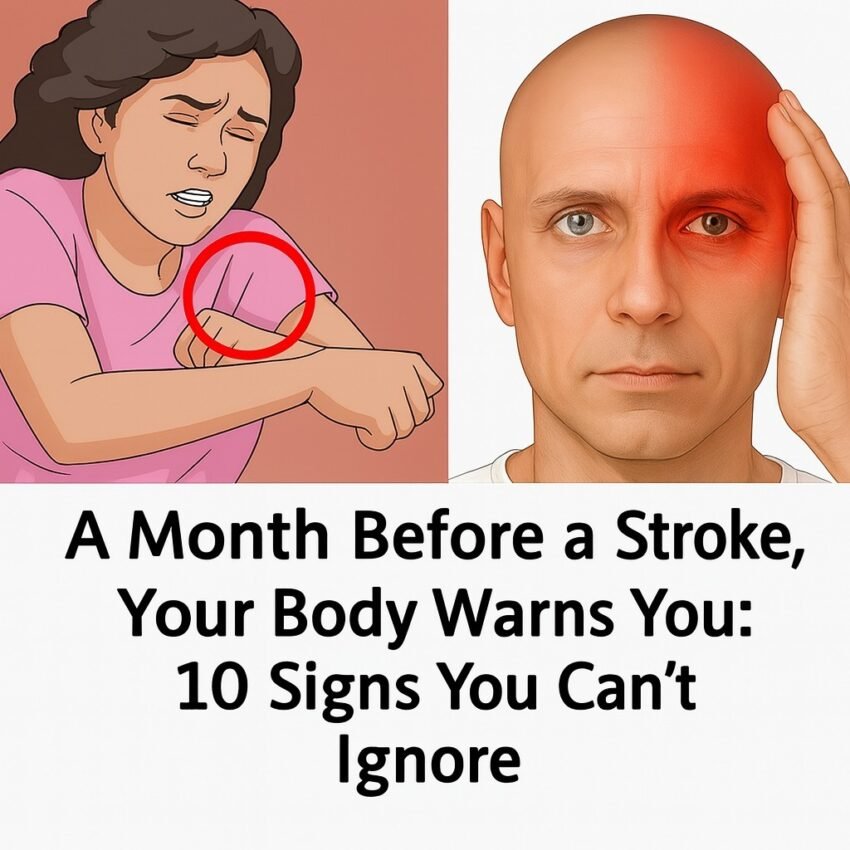
A Month Before a Stroke: 10 Warning Signs Not to Ignore
Important Note
Strokes can happen suddenly without warning, and not everyone experiences early signs. However, some people report symptoms in the weeks leading up to a stroke. These signs are not a diagnosis, but they do require medical attention, especially if they are new, frequent, or worsening.
1. Sudden or Frequent Headaches
Unusual headaches, especially if they are severe, persistent, or different from your usual pattern, may indicate changes in blood flow to the brain.
2. Temporary Vision Problems
Blurred vision, double vision, or brief loss of vision in one or both eyes can be an early sign of reduced blood supply to the brain.
3. Dizziness or Loss of Balance
Frequent dizziness, vertigo, or trouble walking may signal impaired coordination or brain circulation issues.
4. Weakness or Numbness on One Side of the Body
Intermittent numbness or weakness in the face, arm, or leg—especially on one side—should never be ignored.
5. Difficulty Speaking or Understanding Speech
Episodes of slurred speech, trouble finding words, or confusion may be signs of a transient ischemic attack (TIA), often called a “mini-stroke.”
6. Extreme Fatigue Without Clear Cause
Sudden, unexplained exhaustion—especially when combined with other symptoms—can be a subtle neurological warning.
7. Memory Problems or Sudden Confusion
Trouble concentrating, memory lapses, or confusion that appears suddenly may be related to reduced brain oxygen.
8. Nausea or Vomiting With Neurological Symptoms
When nausea or vomiting occurs alongside dizziness, headache, or weakness, it may point to brain involvement rather than a stomach issue.
9. Tingling or Pins-and-Needles Sensations
Recurring tingling sensations, particularly on one side of the body, can indicate nerve or blood flow disturbances.
10. Brief Episodes That Go Away (TIAs)
Short-lived symptoms that resolve within minutes or hours are especially dangerous to ignore. These are often warning strokes that precede a major one.
When to Act Immediately
Seek emergency medical care right away if you or someone else experiences:
- Face drooping
- Arm weakness
- Speech difficulty
Time is critical. Early treatment can prevent permanent brain damage or save a life.
Who Is at Higher Risk
- High blood pressure
- Diabetes
- Smoking
- High cholesterol
- Heart disease
- Obesity or sedentary lifestyle
- Family history of stroke
Bottom Line
Your body does not always give clear warnings before a stroke—but when it does, listening can be lifesaving. Never ignore neurological symptoms, even if they come and go.
If you want, I can also rewrite this for social media, a short viral version, or a medically conservative version suitable for health publications.