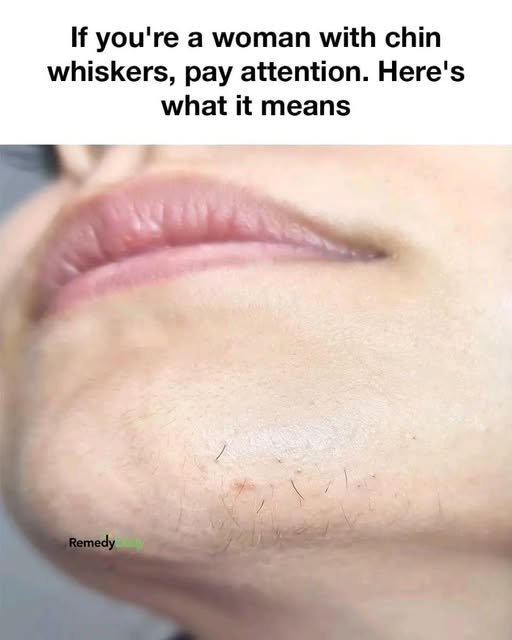
Chin whiskers can be normal, annoying, or cosmetic — but in some cases they do hint at what’s going on hormonally. They’re not a diagnosis on their own, but here’s what they can realistically tell you.
First, the baseline
A few coarse hairs on the chin or jawline are common, especially:
- After puberty
- In your 30s–50s
- Around menopause
- In people with naturally darker or thicker hair
This alone does not mean something is wrong.
What chin whiskers might signal
1. Hormone shifts (most common)
Estrogen dropping or testosterone becoming more noticeable can trigger thicker facial hairs. This often happens:
- After stopping birth control
- Postpartum
- During perimenopause or menopause
2. Polycystic Ovary Syndrome (PCOS)
If chin whiskers are:
- Rapidly increasing
- Thick, dark, and spreading
- Paired with irregular periods, acne, or weight gain
PCOS may be worth checking. Blood tests and ultrasound confirm this — not hair alone.
3. Insulin resistance
High insulin can stimulate androgen production, which can increase facial hair. This is often linked with:
- PCOS
- Prediabetes
- Type 2 diabetes
4. Genetics and ethnicity
Some people are simply wired for chin hair. If relatives have it, that’s your strongest clue.
5. Aging skin + follicles
With age, follicles can become more sensitive to androgens, even if hormone levels stay “normal.”
What chin whiskers usually do not mean
- They are not a sign of cancer
- They do not mean your hormones are “out of control” by default
- They do not indicate poor hygiene
- They are not a detox issue
When to actually look deeper
Consider a medical check if facial hair is:
- Sudden and severe
- Appearing with voice deepening, hair loss on scalp, or muscle changes
- Accompanied by missed periods or infertility
Practical takeaways
- Plucking doesn’t make hair grow back thicker
- Laser or electrolysis works best when hormones are stable
- Treating insulin resistance can reduce new growth in some people
Bottom line
Chin whiskers are usually a normal response to hormones and genetics, not a health crisis. They’re a clue — not a verdict.
If you want, I can:
- Explain how doctors test hormone-related hair growth
- Break down PCOS labs in plain language
- Talk hair-removal options that won’t make it worse
Just say the word.