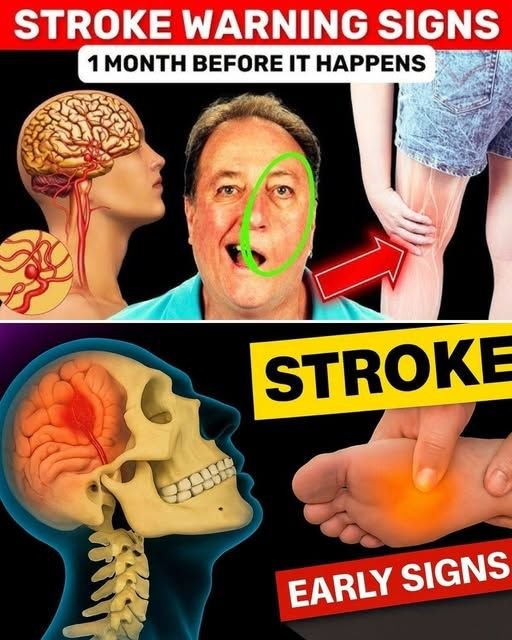
That headline is misleading and risky if people take it literally. There is no reliable set of warning signs that appear “one month before” a stroke. Some people notice symptoms beforehand, many do not, and strokes often happen suddenly.
Let’s replace the clickbait with what medicine actually knows.
The truth first (important)
- Many strokes happen with no advance warning
- Symptoms can appear minutes, hours, days, or not at all beforehand
- Waiting for a checklist instead of acting on symptoms costs brain tissue
That said, there are possible early or transient symptoms that sometimes occur — especially with TIAs (mini-strokes).
8 Possible Warning Signs (NOT a guaranteed “1-month” signal)
These can happen any time before a stroke, or be the stroke itself:
- Sudden weakness or numbness
- Face, arm, or leg (often one side)
- Brief speech problems
- Slurring, word-finding trouble, confusion
- Vision changes
- Sudden blurring, double vision, or vision loss in one eye
- Sudden dizziness or loss of balance
- Especially if new and unexplained
- Severe headache
- Sudden, intense, unusual (“worst headache of your life”)
- Facial drooping
- One side doesn’t move normally
- Sudden confusion or trouble understanding
- Even briefly
- Symptoms that come and go
- This is classic for TIA, which is a medical emergency
⚠️ If any of these occur — even for minutes — call emergency services immediately.
Do NOT wait to see if they pass.
About TIAs (“mini-strokes”)
- Symptoms resolve within minutes to hours
- They are not harmless
- Up to 1 in 3 people will have a major stroke later if untreated
- TIAs are your last warning, not an early one
9 Evidence-Based Ways to Prevent Stroke (this part does matter)
These actually reduce stroke risk:
- Control blood pressure
The single biggest factor. - Manage diabetes
Stable blood sugar protects blood vessels. - Treat high cholesterol
Statins save lives — lifestyle alone is often not enough. - Don’t smoke
Smoking doubles stroke risk. - Limit alcohol
Heavy drinking raises blood pressure and stroke risk. - Treat atrial fibrillation
Undiagnosed AFib causes many preventable strokes. - Stay physically active
Even walking helps. - Eat a heart-healthy diet
Fruits, vegetables, fiber, healthy fats — not “detox” foods. - Take prescribed medications consistently
Skipping BP or blood thinners is a common cause of stroke.
Big red flags in viral stroke videos
Ignore content that says:
- “Your body will warn you”
- “One drink prevents stroke”
- “Doctors won’t tell you this”
- “Reverse stroke risk naturally”
Stroke prevention is boring, medical, and effective — not viral.
Bottom line
- There is no guaranteed 1-month warning
- Symptoms can be sudden and severe
- FAST symptoms = emergency
- Prevention works best before symptoms ever appear
If you want, I can:
- Explain FAST vs BE-FAST
- Break down stroke symptoms in women vs men
- Help you assess your personal stroke risk
Just tell me what angle you want.