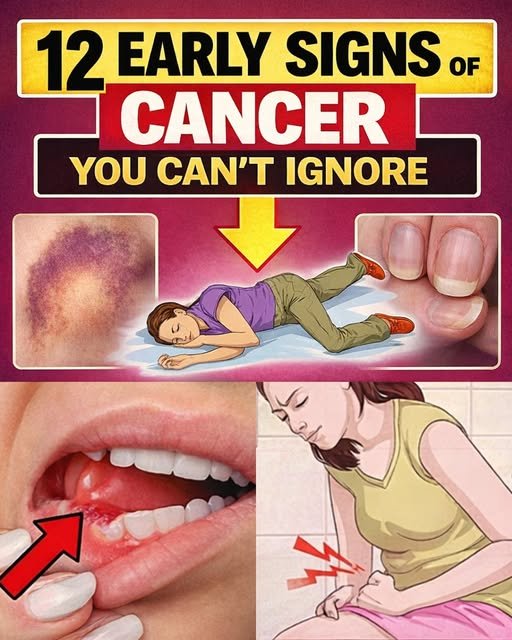
That headline gets shared a lot because it mixes real warning signs with the implication that cancer is hiding behind every symptom. The truth is more nuanced: many of these signs are common and benign, but persistent or unexplained changes should be checked.
Here’s the calm, medically accurate version.
12 Early Warning Signs That Deserve Medical Attention
These are signals to evaluate, not reasons to panic.
1. Unexplained weight loss
Losing 10+ pounds without trying, especially over a short period.
2. Persistent fatigue
Severe tiredness that doesn’t improve with rest and is new for you.
3. Unexplained pain
Pain that:
- Is new
- Persists for weeks
- Worsens over time
Especially bone, abdominal, or head pain.
4. A new lump or thickening
In the breast, testicle, neck, armpit, or groin. Most lumps are benign — but they should be evaluated.
5. Changes in bowel or bladder habits
New constipation, diarrhea, blood in stool, or urinary changes lasting more than a few weeks.
6. Unusual bleeding or discharge
Examples:
- Blood in urine or stool
- Coughing up blood
- Vaginal bleeding outside normal cycles
Always worth checking.
7. A sore that doesn’t heal
Especially on the skin or in the mouth after 2–3 weeks.
8. Persistent cough or hoarseness
Lasting more than 3 weeks without a clear cause.
9. Difficulty swallowing or persistent indigestion
Especially if progressive or associated with weight loss.
10. Skin changes
- New or changing moles
- Darkening, yellowing, or redness
- Persistent itching without a rash
11. Night sweats or fevers
Drenching night sweats or recurrent fevers without infection.
12. Neurological changes
New headaches, vision changes, weakness, numbness, or seizures.
Very important context people don’t hear enough
- Most people with these symptoms do NOT have cancer
- Symptoms matter most when they are:
- New
- Persistent (weeks, not days)
- Unexplained
- Getting worse
Cancer is rare compared to everyday illnesses, but early detection matters.
When to act sooner
Don’t “wait it out” if symptoms are:
- Rapidly worsening
- Combined (e.g., weight loss + pain + fatigue)
- Associated with bleeding
- Affecting daily function
What actually reduces cancer risk
- Recommended screenings (colon, breast, cervical, lung when appropriate)
- Not smoking
- Limiting alcohol
- Maintaining a healthy weight
- Treating chronic inflammation or infections
Bottom line
These signs are not predictions — they’re signals to pay attention. Listening to your body doesn’t mean assuming the worst; it means getting things checked early when outcomes are best.
If you want, I can:
- Match symptoms to specific cancers (realistic risk, not fear-based)
- Help you decide when to see a doctor vs monitor
- Explain screening guidelines by age
Just tell me what you’re worried about.