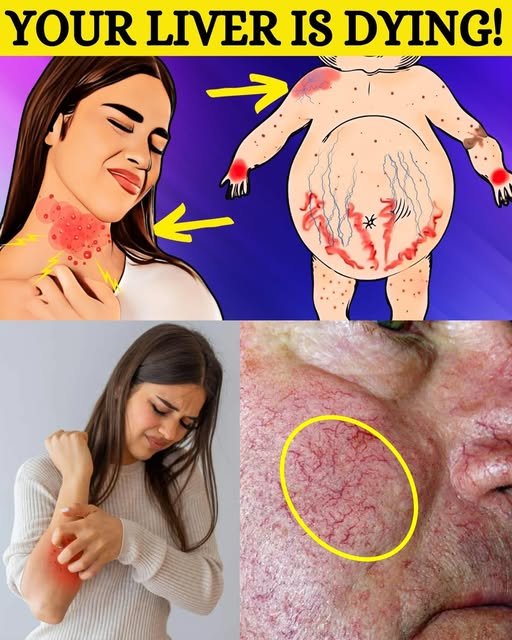
That headline leans hard on fear, but there is a real point underneath it: fatty liver disease is often silent, especially early on. The danger isn’t that there are secret dramatic signs — it’s that there are usually very few clear ones.
Here’s the accurate, non-alarmist version.
First, the reality check
- Most people with fatty liver have no symptoms at all
- When symptoms do exist, they’re vague and easily blamed on other things
- The disease is usually found through blood tests or imaging, not symptom-spotting
So these are possible clues, not reliable alarms.
8 Signs That Can Be Associated With Fatty Liver Disease
1. Persistent fatigue
Very common, very nonspecific — but frequently reported.
- Not relieved by rest
- Often overlooked
2. Discomfort or fullness in the upper right abdomen
- Dull ache, pressure, or heaviness
- Not sharp pain
- Comes and goes
3. Elevated liver enzymes on blood tests
This is the most common “sign”
- ALT and AST mildly elevated
- Many people feel completely fine
4. Unexplained weight gain or difficulty losing weight
Especially central (abdominal) weight.
Fatty liver is closely tied to insulin resistance.
5. Brain fog or poor concentration
More common in later stages, but can appear earlier.
Often subtle.
6. Darkening of the skin (acanthosis nigricans)
- Velvety dark patches on neck, armpits, or groin
- Signals insulin resistance, not liver damage itself
7. High triglycerides or low HDL (“good cholesterol”)
Seen on routine labs.
Fatty liver is part of a metabolic cluster, not an isolated organ issue.
8. Enlarged liver on imaging
Usually found incidentally on ultrasound or CT.
You won’t feel this yourself.
What fatty liver usually does not cause early
- Jaundice (yellow eyes/skin)
- Severe pain
- Itching
- Swelling of legs or belly
Those suggest advanced liver disease, not early fatty liver.
Why it’s called a “silent” condition
Because by the time obvious symptoms appear, liver damage may already be significant. That’s why doctors rely on:
- Blood tests
- Imaging
- Risk factors (diabetes, obesity, metabolic syndrome)
—not symptom checklists.
The good news (this matters)
Early fatty liver is often reversible.
Evidence-based improvements come from:
- Modest weight loss (5–10%)
- Improved blood sugar control
- Reducing ultra-processed foods
- Physical activity (even walking helps)
- Treating cholesterol and blood pressure
No detoxes. No miracle drinks.
Bottom line
Fatty liver isn’t a “silent threat” hiding behind dramatic symptoms — it’s a quiet metabolic condition usually found through routine care. The danger is ignoring risk factors, not missing a secret sign.
If you want, I can:
- Help you understand liver blood tests
- Explain NAFLD vs NASH in plain language
- Tell you which symptoms mean advanced disease
- Help assess your personal risk realistically
Just tell me what you’re worried about.