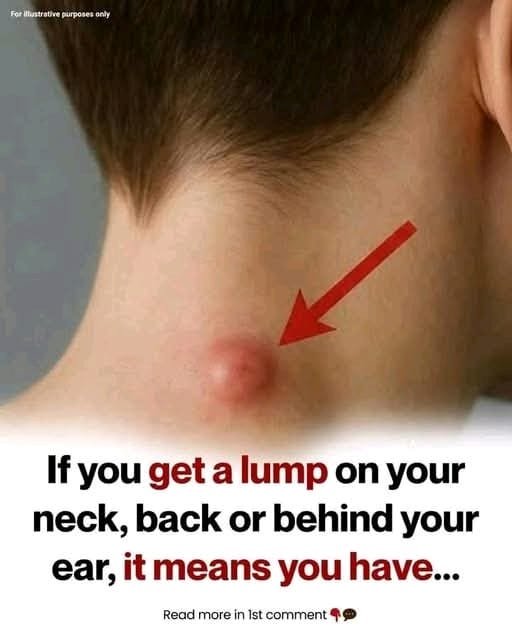
If You Get a Lump on Your Neck, Back, or Behind Your Ear, It Could Mean Several Things
Finding a lump on the neck, back, or behind the ear can be concerning, but in many cases it is harmless. These lumps can develop for different reasons, ranging from minor infections to benign growths. However, it is important to monitor any unusual lump and seek medical advice if it persists or grows.
1. Swollen Lymph Nodes
One of the most common causes is enlarged lymph nodes. Lymph nodes are small glands that help the body fight infections. When the body is dealing with a cold, throat infection, or another illness, lymph nodes in the neck or behind the ear may swell.
This swelling is usually temporary and may go away once the infection clears.
2. Lipoma (Fatty Lump)
A Lipoma is a soft, fatty lump that grows under the skin. It is usually painless, moves slightly when touched, and grows slowly. Lipomas are generally harmless and often do not require treatment unless they become uncomfortable.
3. Sebaceous or Skin Cyst
A Sebaceous Cyst can develop when a skin gland becomes blocked. These cysts often appear as small round lumps under the skin and may contain fluid or oily material. They are usually benign but can become inflamed or infected.
4. Skin Infection or Abscess
Sometimes a lump forms due to a localized infection. An Abscess is a collection of pus that develops when bacteria enter the skin. It may feel tender, warm, or painful and may require medical treatment.
5. Swollen Salivary Glands
Lumps near the jaw or behind the ear may also be related to swollen salivary glands caused by infection, blockage, or inflammation.
6. Benign Skin Growths
Non-cancerous skin growths such as Epidermoid Cyst can also appear as lumps. These typically grow slowly and are usually harmless.
When to See a Doctor
You should consider seeing a healthcare professional if the lump:
-
Continues growing
-
Becomes painful or very hard
-
Lasts longer than two weeks
-
Causes fever or unexplained weight loss
-
Does not move under the skin
Early medical evaluation helps determine the exact cause and ensures appropriate treatment if necessary.