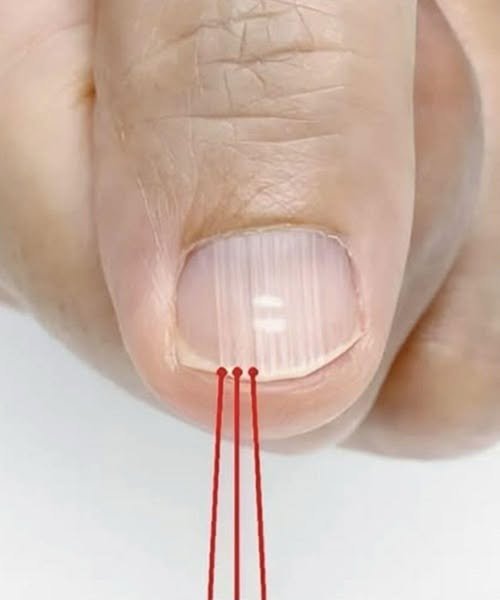
If You Have These Lines on Your Nails After 40 — What Do They Really Mean?
You may have seen alarming posts claiming that lines on your nails after age 40 are a “clear sign” of a serious disease. In most cases, that is not true.
Nail changes are common as we age, and many are completely harmless.
1. Vertical Lines (Most Common)
These are called longitudinal ridges.
They:
- Run from the cuticle to the tip
- Become more visible with age
- Are usually normal after 40
They are similar to wrinkles in the skin — a natural part of aging.
Possible Causes
- Normal aging
- Mild dehydration
- Minor nutrient gaps
- Reduced nail oil production
In most cases, vertical ridges are not a medical problem.
2. Horizontal Lines (More Concerning)
These are called Beau’s lines.
They:
- Run across the nail
- May appear after severe illness or stress
- Can follow high fever, infection, or trauma
If several nails suddenly develop deep horizontal grooves, it may be worth discussing with a doctor.
3. Nail Changes Linked to Nutrient Deficiencies
Certain deficiencies may affect nail health:
- Iron deficiency may cause brittle or spoon-shaped nails
- Vitamin B12 deficiency can cause dark lines or discoloration
- Zinc deficiency may lead to white spots
- Low Vitamin D can affect overall bone and nail strength
However, nail lines alone are not enough to diagnose a deficiency.
4. When to See a Doctor
Seek medical advice if you notice:
- Sudden dark streaks (especially one single dark line)
- Nail thickening or separation
- Pain, swelling, or redness
- Rapid changes in nail appearance
A single dark vertical stripe, especially if new, should be evaluated to rule out rare but serious causes.
The Truth Behind Viral Claims
Posts that say nail lines after 40 are a “clear sign” of a hidden disease are often exaggerated. In most people, these lines are a normal part of aging and nothing to worry about.
If you are concerned, a simple medical check-up and possibly basic blood work can provide reassurance.
Bottom Line
Lines on your nails after 40 are usually harmless and related to aging. While certain patterns can signal health issues, nail changes alone rarely confirm a serious condition.
If you notice unusual or sudden changes, consult a healthcare professional for proper evaluation rather than relying on viral health warnings.