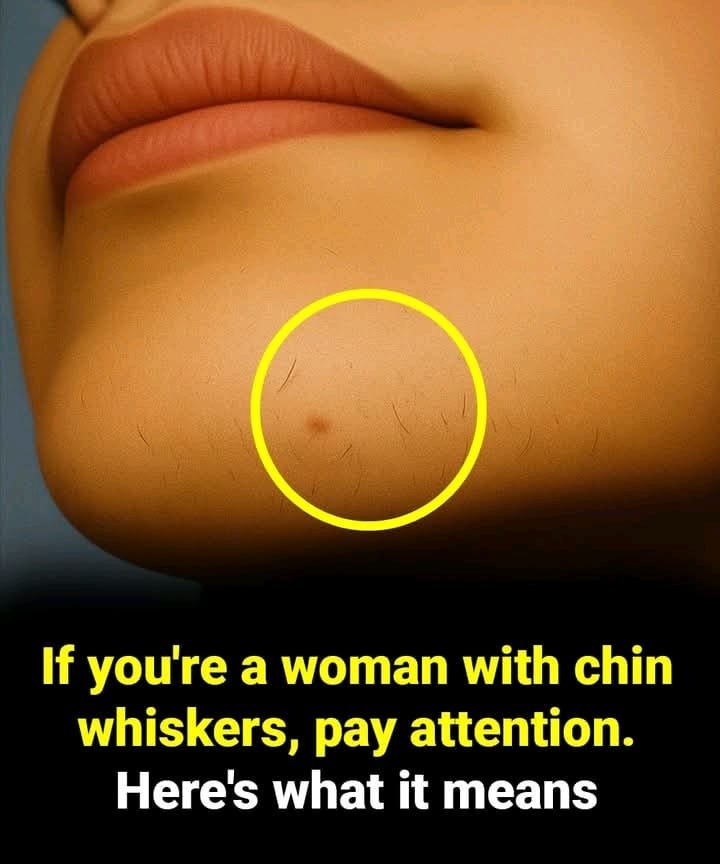
If you’re a woman noticing coarse, dark “whisker-like” hairs on your chin, it’s worth paying attention—not to panic, but to understand what your body may be signaling.
Chin Whiskers in Women: What They Can Mean
1. Hormonal Imbalance (Most Common)
Chin whiskers are often linked to elevated androgens (male-type hormones).
Possible causes:
- PCOS (Polycystic Ovary Syndrome) – the most common cause
- Insulin resistance
- Perimenopause or menopause
- Thyroid dysfunction (less common)
⚠️ Red flags that point toward hormones:
- Irregular or missing periods
- Acne (especially jawline)
- Weight gain around the belly
- Thinning scalp hair
- Difficulty getting pregnant
2. PCOS: The #1 Condition to Rule Out
With PCOS:
- Ovaries produce excess androgens
- Hair grows in male-pattern areas (chin, jaw, neck)
- Blood sugar regulation is often impaired
👉 Chin hair alone doesn’t diagnose PCOS, but chin hair plus other symptoms deserves evaluation.
3. Insulin Resistance Can Drive Chin Hair
High insulin levels:
- Stimulate ovaries to make more androgens
- Worsen facial hair growth even if testosterone is “normal”
This is why chin hair often coexists with:
- Sugar cravings
- Fatigue after meals
- Difficulty losing weight
4. Perimenopause & Menopause
As estrogen declines:
- Androgens become more dominant
- Even normal androgen levels can cause whiskers
This is very common after age 40 and not dangerous—but still hormone-related.
5. When Chin Hair Is Usually NOT Concerning
- A few fine hairs with no other symptoms
- Strong family/genetic tendency
- Gradual appearance over many years
🚨 When You SHOULD Get Checked
Seek medical advice if chin whiskers appear suddenly or worsen quickly, especially with:
- Voice deepening
- Rapid muscle gain
- Severe acne
- Missed periods
- Hair growth spreading to chest or abdomen
These are not normal aging changes.
What Actually Helps (Beyond Tweezing)
Medical evaluation may include:
- Testosterone & DHEA-S
- Fasting insulin or glucose
- Thyroid tests
- Pelvic ultrasound (if PCOS suspected)
Lifestyle support (evidence-based):
- Stabilizing blood sugar (protein + fiber meals)
- Strength training
- Stress reduction (stress raises androgens)
- Adequate sleep
⚠️ Hair removal treats the symptom—not the cause.
Bottom Line
Chin whiskers in women are often a hormonal signal, not a cosmetic flaw.
They don’t mean something is “wrong,” but they can be an early clue worth listening to.
If you want, I can:
- Explain PCOS vs normal hormonal hair growth
- Help you decide which tests are worth asking for
- Share evidence-based ways to reduce hormonal facial hair
- Break down natural vs medical treatment options
Just tell me what you’d like next 🌿